 how-to
7 Signs of Fake Bookstagram Followers to Check
Last Updated: October 30, 2026
Quick Summary
You can identify fake bookstagram followers by running seven checks together: profile pictures and completeness, spam-pattern usernames, follower-to-following ratio, sudden growth spikes, post frequency, engagement quality, and a manual review of the follower list. One weak signal proves little, but a pattern of weak signals tells the story. If an account fails two or more checks, skip it.
- Sample twenty follower profiles and note how many have no photo, empty bio, or no posts.
- Spammy usernames often use long random number strings or repeat the same word plus a number.
- Genuine Bookstagram comments reference specific characters, tropes, plot turns, or the cover design.
- Vetting one account with the four-step workflow takes about fifteen minutes.
- Ask reviewers for audience insights screenshots and past review links before sending a copy.
Table of Contents
- Why Fake Followers Matter to Indie Authors
- How to Spot Fake Instagram Followers: 7 Checks That Work
- Reading Follower Growth and Activity Patterns
- What a Genuine Bookstagram Engagement Rate Looks Like
- How to Vet Book Influencers Before Sending a Review Copy
- Bookstagram Review Copy Scams and How to Avoid Them
- What to Do After You Find Suspicious Followers
- Build Your Reviewer Shortlist with The Early Shelf
- Frequently Asked Questions
Why Fake Followers Matter to Indie Authors
Fake bookstagram followers are accounts that follow a Bookstagram profile without being real, engaged readers, bots, purchased followers, or spam accounts.
A review offer is a trade: you give a book, you expect an honest review.
The good news: you can learn how to identify fake bookstagram followers with a short, repeatable check.
Follower count alone tells you little. Real vetting means reading several signals together.
How to Spot Fake Instagram Followers: 7 Checks That Work
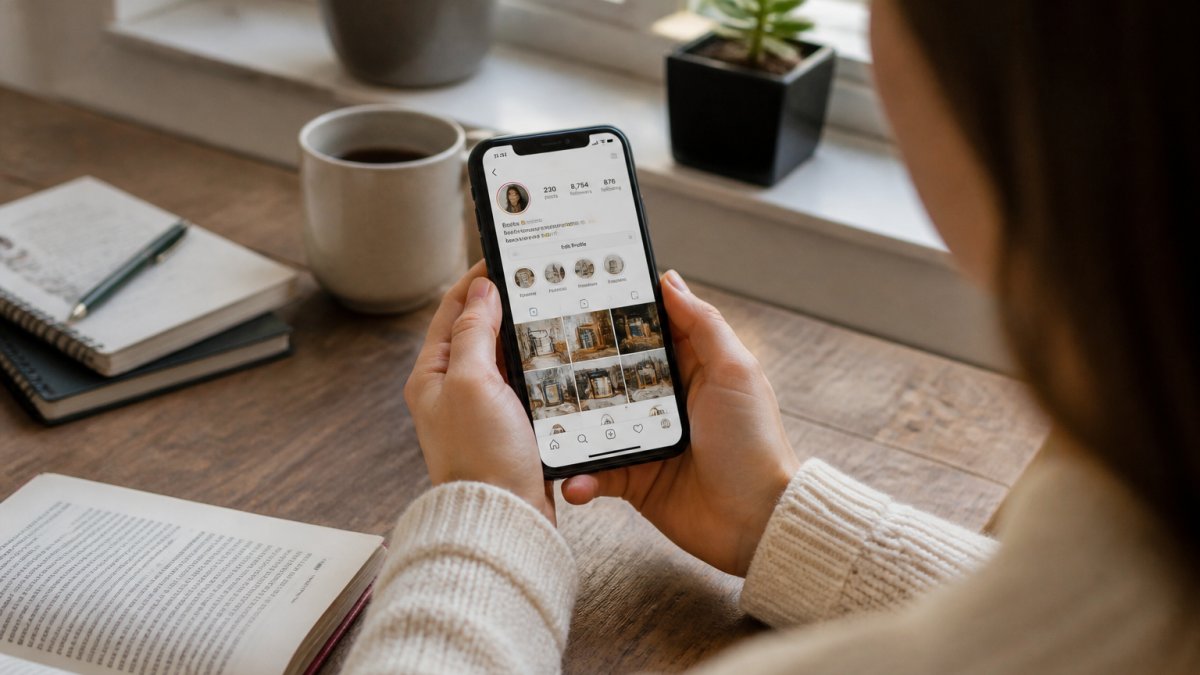
Spotting fake Instagram followers comes down to seven checks. Run all seven before you judge an account: one weak signal proves little, but a pattern of weak signals tells the story.
The seven checks:
- Profile pictures and profile completeness
- Usernames for spam patterns
- Follower and following counts
- Follower growth spikes
- Post frequency and account activity
- Engagement quality
- Manual review of the follower list
Let's take them one at a time.
Check Profile Pictures and Profile Completeness
Real readers usually show a face, a shelf, or a book stack. Fake accounts often show nothing.
Open a sample of the account's followers and tap through ten or twenty profiles.
Profile completeness is a useful signal. A real Bookstagram reader tends to have a bio, a link, and a feed.
Scan Usernames for Spam Patterns
Spammy usernames follow templates. Once you see the pattern, you can't unsee it.
Watch for long strings of random numbers (like reader_84739201), random letter jumbles, the same word plus a number repeated across many accounts, and names with nothing to do with books.
A single odd username means nothing. Twenty of them in one follower list is a clear warning.
Compare Follower and Following Counts
The follower-to-following ratio is a useful clue, not a verdict. A healthy Bookstagram account usually has more followers than accounts it follows; a ratio running the other way deserves a closer look.
Use this rough guide:
| Signal | What It Often Means | What to Do |
|---|---|---|
| Many more followers than following | Normal for an established account | Move on to engagement checks |
| Following far more than followers | Possible follow-for-follow or bots | Sample the follower list |
| Following and followers nearly equal, both tiny | New or inactive account | Check post history |
| Thousands following, few followers | Likely follow-bait or purchased growth | Treat as a red flag |
One caveat: new accounts often follow many people to build a network. So check account age before you judge.
Reading Follower Growth and Activity Patterns
Growth and activity patterns show how an audience was built. Real growth is slow and uneven. Fake growth arrives in bursts.
This is where purchased followers often give themselves away.
Spotting Sudden Spikes on the Follower Graph
Sudden spikes are a common sign of bought followers. A genuine Bookstagram account grows in a jagged line over months. A purchased audience appears overnight.
You can't see the full follower graph on Instagram, but you can spot the traces: a large follower count with few posts, big numbers with almost no comments, a sudden jump mentioned in older posts or stories, and follower counts that don't match the visible history.
If the numbers and the history don't line up, slow down before you send a book.
Reviewing Post Frequency and Account Activity
Real reviewers post. Fake or inactive accounts go quiet.
Check the last ten posts and ask: are posts recent or did the account stop months ago? Is there a steady rhythm or long gaps? Do the captions sound human? Are the photos original or reused from other accounts?
An account that hasn't posted in a year can't review your book.
What a Genuine Bookstagram Engagement Rate Looks Like
A genuine Bookstagram engagement rate is modest and steady, and the comments read like they came from people who finished the book. Fake engagement arrives in bursts, or doesn't arrive at all. Don't treat engagement rate as a single pass/fail number, benchmarks vary too widely by account size, genre, and posting cadence.
Read the comments, not just the count
Open the last five posts and read every comment. Genuine bookish engagement has recognizable features:
- Comments reference specific characters, tropes, plot turns, or the cover design, not just "Nice!" or "Love it."
- Readers ask questions ("Is this YA or adult?", "Does it have a love triangle?") or share their own reading experience.
- The same commenters don't appear on every single post in identical wording.
Fake or low-quality engagement tends to look like this:
- Generic praise repeated across posts: "Great post!", "So good", fire and heart emojis with no text.
- Comments that have nothing to do with books, crypto pitches, "DM me for promo," or unrelated emojis.
- A small cluster of accounts commenting on every post within minutes, often with similar phrasing. That pattern suggests a pod or bot ring.
Use the rate as a secondary check, with caveats
Engagement rate is likes plus comments divided by followers. Engagement rate varies with follower count, so a low rate alone doesn't prove fake followers, and a high rate alone doesn't prove real ones. Compare the account to similar-sized Bookstagram accounts in the same genre. Far below peers with generic comments is a warning sign; high with substantive, varied comments is a positive signal.
The Bookstagram-specific test
Ask one question: could these comments only have been written by someone who read a book? If readers debate a twist, recommend similar titles, or tag friends who read the genre, the audience is likely genuine. If the comments could sit under any lifestyle post with the book swapped out, the engagement is probably shallow or purchased.
How to Vet Book Influencers Before Sending a Review Copy
Vetting book influencers means checking authenticity before you spend a single copy.
We recommend a simple four-step workflow. It takes about fifteen minutes per account.
Step 1: Sample the audience. Open the follower list and review twenty profiles.
Step 2: Read the engagement. Open the last five posts. Check whether comments are specific and varied.
Step 3: Check the history. Confirm the account posts regularly and has done so for months.
Step 4: Score the account. Use this checklist:
- Profile has a real photo and a complete bio
- Usernames in the follower list look human
- Follower-to-following ratio looks healthy
If an account fails two or more checks, skip it. If you want a deeper walkthrough, see our guide on how to find book reviewers on Instagram.
Bookstagram Review Copy Scams and How to Avoid Them
Bookstagram review copy scams are accounts that pose as reviewers to get free books. They collect copies and never review.
Watch out for these patterns:
- A reviewer who asks you to pay for a review
- Accounts that demand physical copies with no review history
- Profiles that message first with a generic pitch
A real reviewer will share their review history and their genre focus. Ask for links to past reviews.
Also, be careful with accounts that tag many authors in unrelated posts.
What to Do After You Find Suspicious Followers
Finding fake followers is useful only if you act on it carefully.
Document before you decide
Before you remove an account from your shortlist, save a short record: screenshot the profile, the follower sample you reviewed, and two or three examples of suspicious comments or usernames. Note the date and the specific signals. This keeps your decisions consistent and gives you something concrete if you later need to explain why you declined. Keep it factual, "sampled 20 followers, 14 had no profile picture or posts", not judgmental.
Decide whether to collaborate
Use a simple rule: if an account fails two or more of the checks in this guide, skip it. Don't confront the account or accuse it publicly. A polite decline is enough: "Thanks for reaching out, we're not able to move forward with this collaboration right now." If you want to keep the door open, ask for audience insights first (see below) and reassess.
Ask for audience insights
A genuine Bookstagram reviewer can usually share basic audience information from Instagram's built-in insights: follower growth over time, top locations, age ranges, and reach on recent posts. Ask them to share screenshots. A sudden vertical spike in follower growth, or an audience concentrated in a location unrelated to the account's language and content, is worth discussing.
Raise concerns professionally
If you've already sent a review copy and now suspect the account is fake, keep the conversation professional. Ask for the review timeline and a link to past reviews. If the account becomes abusive or demands payment, stop engaging and use Instagram's report and block tools. Report accounts that impersonate reviewers or run payment-for-review schemes through in-app reporting.
Respect privacy and avoid overreach
Everything in this guide can be checked from public information: profile pages, follower lists, posts, and comments. Don't create fake accounts to probe someone, don't message their followers, and don't publicly call out an account as fake without strong evidence. If unsure, ask the reviewer directly for audience insights or past review links.
Refocus on real reviewers
Once you've cleared out the suspicious accounts, put your energy into reviewers who follow through. Our troubleshooting guide on why ARC readers aren't leaving reviews walks through the common causes. And when you're ready to rebuild your list from scratch, this guide on finding book reviewers for free shows where to look.
Build Your Reviewer Shortlist with The Early Shelf
A clean shortlist beats a big one. The Early Shelf is a curated community connecting indie authors with dedicated advance readers.
You work inside a community of advance readers interested in indie books. Visit The Early Shelf's website to see current pricing before you commit.
Here's the challenge: fake followers waste your budget and stall your launch. The Early Shelf connects indie authors with a community of advance readers.
Frequently Asked Questions
How can you tell if a Bookstagram account has fake followers?
Look at the follower list itself, not just the number. Open a sample of followers and check whether the profiles have real photos, a bio, and a posting history. Accounts with generic usernames, no posts, and stock or missing profile pictures are common signs. Then compare follower count to engagement: an account with 40,000 followers but a dozen likes per post is unlikely to have a real audience. Run two or three checks together before drawing a conclusion.
Are sudden follower spikes a sign of fake bookstagram followers?
Often, yes. Genuine growth on a Bookstagram account usually builds gradually through consistent posting, reviews, and community interaction. A jump of thousands of followers in a day or two, especially without a matching rise in likes and comments, points to purchased or bot followers. Check the follower graph over time and cross-reference the spike date with the account's posts. If nothing notable happened that week, treat the growth as suspicious.
Can Instagram identify or remove fake followers?
Instagram does remove bot and spam accounts, and it has periodically purged large numbers of inauthentic profiles, which is why some accounts lose followers overnight. The platform does not publish a full breakdown of which followers are fake, so authors cannot rely on Instagram alone. Manual review of the follower list, engagement quality, and growth patterns remains the most reliable way to judge an account before you send a review copy.
How do you vet book influencers and avoid Bookstagram review copy scams?
Start with a repeatable check: review the account's recent posts and confirm the comments are specific to the book rather than generic. Ask for examples of past reviews and check whether those reviews appear on the platform where they were promised. Be wary of accounts that ask for payment to guarantee a review, or that message you first with a review offer. The Early Shelf is a curated community connecting indie authors with advance readers.